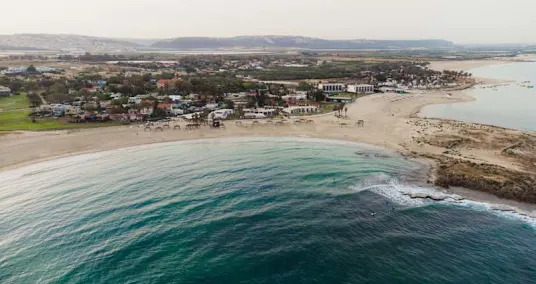
The discovery was made in an ancient shipwreck in the Dor Lagoon near the Carmel Coast, where archaeologists recovered nine pieces of unprocessed iron known as “blooms.”
Researchers from the University of Haifa said Wednesday that an underwater excavation off Israel’s northern Mediterranean coast uncovered what they described as the earliest known cargo of raw iron transported by ship, dating back around 2,600 years, Xinhua reported.
The discovery was made in an ancient shipwreck in the Dor Lagoon near the Carmel Coast, where archaeologists recovered nine pieces of unprocessed iron known as “blooms.” According to the university, the find provides direct evidence of how iron was transported in its earliest commercial stages.
The material was preserved in its original form, having solidified directly in a smelting furnace without undergoing forging or further refinement. Researchers said this distinguishes the cargo from later iron artifacts that typically show signs of shaping or tool-making.
Unlike copper and bronze, which could be melted into liquid form in ancient production processes, iron was heated with charcoal to produce a solid, porous mass. That mass was generally hammered to remove impurities and create denser material suitable for tools and implements.
The recovered blooms showed no indication of that secondary processing stage, suggesting they were transported immediately after production.

Earliest iron shipment discovered in ancient Mediterranean wreck
To determine the age and condition of the cargo, researchers conducted microscopic and chemical analyses.
Radiocarbon dating was also carried out on charred wood embedded in one of the pieces, helping confirm the timeline of the shipment. The findings were published in the journal Heritage Science.
Researchers said the cargo indicates that iron was being moved in raw form from production sites to other locations for further processing, pointing to a level of specialization in ancient manufacturing and trade networks in the Mediterranean.
The University of Haifa said the discovery provides new insight into early iron production and distribution practices in the region.
LATEST POSTS
- 1
 Understanding Preschool Projects: An Extensive Aide
 - 2Bowen Yang is reportedly leaving 'Saturday Night Live' after this week's episode
- 3Interpreter Starts Sobbing as 11-Year-Old Testifies About Last Time He Saw His Mom Before She Was Killed in Missile Strike
- 4UN torture cm'tee report flags Israel for allegedly mistreating journalists, detainees, ex-MAG
- 5Woman leaves bachelorette trip after trusting her gut about sketchy men partying it up with friends




- Instructions to Improve Your Mental Exploration with Cutting edge Measurements
- South Carolina confirms 124 new measles cases as outbreak on the Arizona-Utah line grows
- 10 times the sky amazed us in 2025
- At least 55 injured in Russia after train crashes, overturns
- Surging measles cases are 'fire alarm' warning that other diseases could be next
- Pick Your Favored method of transportation
- Some are walking out. Some are shouting. Some are oblivious. How kids are reacting to THAT 'Wicked: For Good' scene
- Dominating Monetary Administration: A Bit by bit Manual for Making an Individual Financial plan
- Hungary's 'water guardian' farmers fight back against desertification