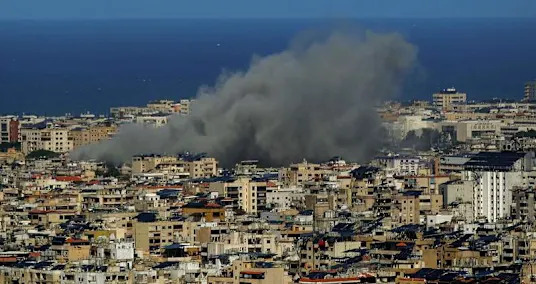
The Israeli military has carried out a new round of air strikes in southern Lebanon, less than a day after Israel and Lebanon held their first direct talks in decades.
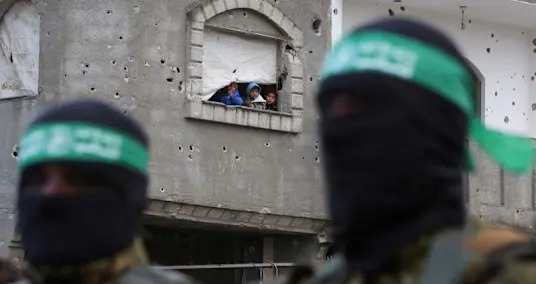
Residents of the towns of Mjadel, Baraachit, Jbaa and Mahrouna were told to evacuate areas around locations that the Israeli military alleged were weapons warehouses belonging to the Iranian-backed group. No casualties have been reported.
An Israeli military spokesman said the sites constituted a ceasefire violation and warned that it would continue to operate "to remove any threat" to Israel.
Israel has carried out near-daily strikes on Lebanon since a ceasefire took effect in November 2024, following 13 months of conflict.
There was no immediate comment from Lebanon's leaders to Thursday's strikes. Lebanese politicians have previously condemned similar strikes as ceasefire violations.
Under the first phase of a deal brokered by the US and France, Israeli troops were to withdraw from southern Lebanon, while Hezbollah was to remove its fighters and weapons from south of the Litani river, about 30km (20 miles) from the border with Israel - a plan the group and its allies oppose.
Israel has maintained positions at several strategic border sites and stepped up its air strikes in recent weeks. It is an escalation officials say is driven by Hezbollah's attempts to rebuild its military infrastructure and what they see as limited Lebanese government efforts to disarm the group.
Thursday's strikes came less than 24 hours after Israel and Lebanon sent civilian envoys to the Lebanese border town of Naqoura for their first direct talks in decades.
The talks, hosted at the headquarters of the UN peacekeeping mission, Unifil, took place during a meeting of the ceasefire monitoring committee, which until now had only included military officers from the US, France, Lebanon, Israel and Unifil.
Israeli Prime Minister Benjamin Netanyahu's office issued a statement saying the meeting "took place in a good atmosphere" and that it "was agreed that ideas would be formulated to advance possible economic cooperation between Israel and Lebanon".
It also said that Israeli envoys "clarified that the disarmament of Hezbollah is obligatory, regardless of the advancement of economic co-operation".
Lebanese Prime Minister Nawaf Salam was more cautious, saying Lebanon remained "far" from diplomatic normalisation with Israel and that the talks were focused on "defusing tension".
"We are not yet at peace talks," he told reporters, saying Lebanon's priorities were the cessation of hostilities, the release of Lebanese detainees held by Israel, and Israel's full withdrawal from its territory.
He added that Beirut was open to the deployment of French and US troops to help verify efforts to disarm Hezbollah.
The latest strikes and diplomatic moves coincide with a visit by a UN Security Council delegation to Lebanon to review the stalled implementation of the ceasefire.
LATEST POSTS
- 1
 The Main 15 Applications for Efficiency and Association
 - 2The next frontier in space is closer than you think – welcome to the world of very low Earth orbit satellites
- 3From invasive species tracking to water security – what’s lost with federal funding cuts at US Climate Adaptation Science Centers
- 4Blue Origin's next space tourism flight will break new ground for people with disabilities
- 5Computerized Domains d: A Survey of \Vivid Undertakings\ Computer generated Reality Game


- I read 115 books this year. 'Wuthering Heights,' 'Heart the Lover' and 'The House of My Mother' were among my 10 favorites.
- Investigate These Retreats Well known With Seniors
- A NASA spacecraft orbiting Mars may be dead
- The Main 20 Gaming Control center Ever
- Flu activity in US could continue to rise for weeks, top CDC epidemiologist says
- Mexico says a third of 130,000 missing people might be alive, fueling criticism from families
- Holocaust survivor, descendants urge High Court to allow Gaza children medical access
- Two UN peacekeepers killed in explosion in Lebanon
- Virtual National Science Foundation internships aren’t just a pandemic stopgap – they can open up opportunities for more STEM students