Protests took place in Tel Aviv, Jerusalem, Haifa, and Beersheba, as a survey found broad but uneven support among Jewish Israelis for Operation Roaring Lion.
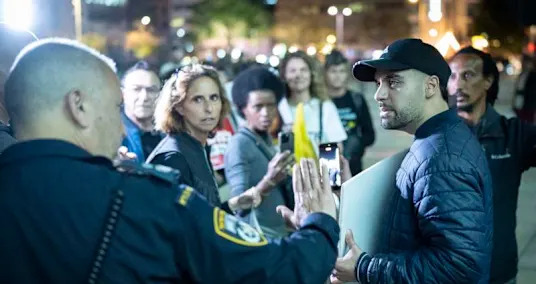
Israel Police arrested 21 anti-war protesters Saturday night as demonstrations against the conflict with Iran expanded in multiple cities despite restrictions on public gatherings.
Protests took place in Tel Aviv, Jerusalem, Haifa, and Beersheba, with hundreds of participants reported in Tel Aviv and Jerusalem and about 100 in Haifa, marking the largest turnout since weekly demonstrations began. Authorities said 13 people were arrested in Tel Aviv and eight in Haifa.
Police said the gatherings were not approved under Home Front Command regulations that ban events with more than 50 people. Officials said the increase in turnout followed calls by groups opposing the government to protest despite the restrictions.
“During a situation assessment that took place at the scene with a Home Front Command representative… it was clarified that there was a real risk to human life and accordingly, Yarkon [precinct] police commander Tzachi Sharabi ordered the gathering to be dispersed,” police said.
Hadash-Ta’al chairman Ayman Odeh, an Arab lawmaker involved in the protests, criticized the police response, calling officers fascists “in the service of the government” and saying they were afraid of “the heroic citizens who went out, despite everything, to make their voice heard.”

Survey shows broad, uneven support for war
The demonstrations come as a March 2026 survey by the Israel Democracy Institute found broad but uneven support among Jewish Israelis for Operation Roaring Lion. Support was strongest on the Right at 87% and about half on the Left.
The survey also found that Jewish and Arab respondents largely agreed that Iran’s resilience has been stronger than expected. Most Jewish respondents said Israeli society could sustain the campaign for up to one month, while 28% said as long as needed. Arab respondents were less optimistic about how long the public could endure the conflict.
A majority of Jewish respondents said Prime Minister Benjamin Netanyahu’s decision was driven by security considerations, while most Arab respondents viewed it as political.
LATEST POSTS
- 1
 Finding the Universe of Workmanship: Individual Encounters in Imagination
 - 2Manageable Living: Eco-Accommodating Decisions for Regular day to day existence
- 3Tatiana Schlossberg, JFK's granddaughter, dies at 35 after terminal cancer diagnosis
- 4Most loved VR Game for Wellness: Which Keeps You Dynamic?
- 5Pick Your Favored kind of salad


- Black Friday streaming deals 2025: Grab the Disney+ Hulu bundle for only $5 and save over 60%
- Understanding Various Sorts of Financial balances: An Extensive Outline
- 'All Her Fault' ending explained: The shocking conclusion to the psychological thriller inspired by true events
- 2024 Ferrari Roma With Just One Owner & 3,300 Miles For Sale At $...
- French ship crosses Strait of Hormuz in first Western European transit during Iran war
- A few Exemplary Chinese Dishes, Which Are Famous Around the world
- US bishops officially ban gender-affirming care at Catholic hospitals
- A single shot of HPV vaccine may be enough to fight cervical cancer, study finds
- UK to hold fresh pork, other affected Spanish products at border amid African swine fever outbreak